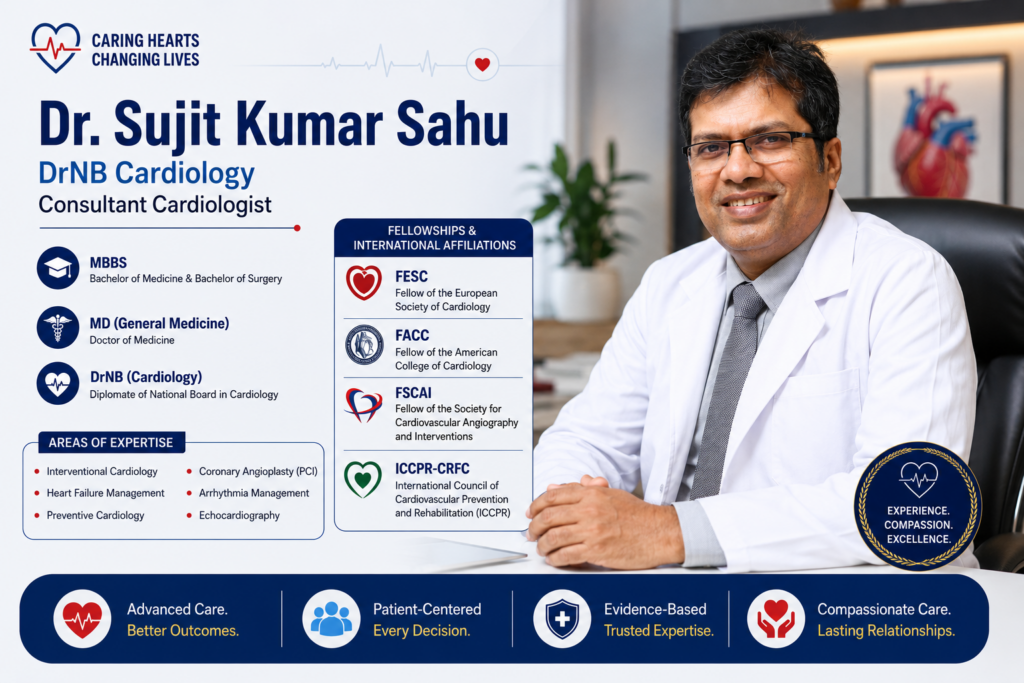
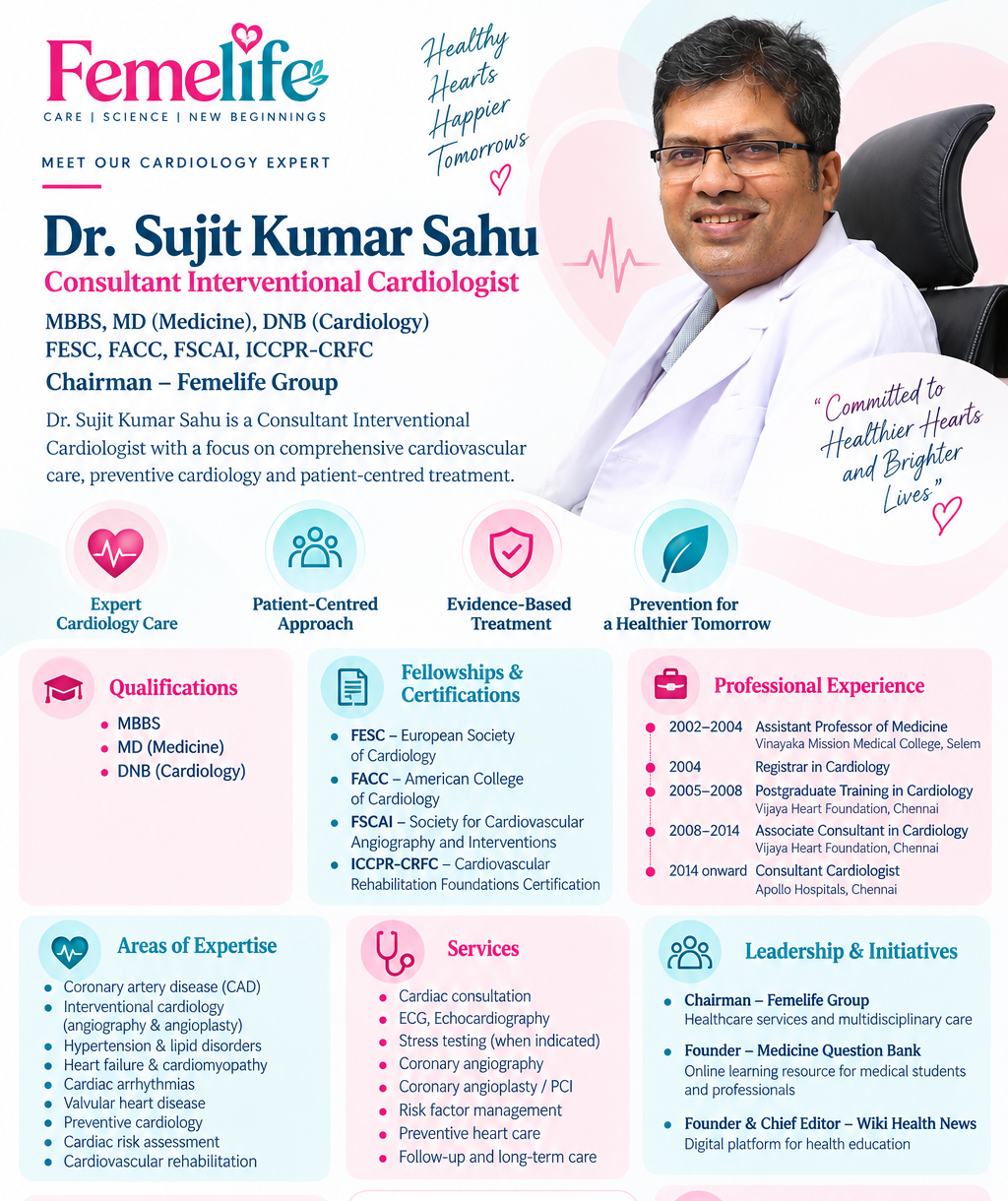
Dr. Sujit Kumar Sahu
MBBS, MD (Medicine), DNB (Cardiology)
FESC, FACC, FSCAI, ICCPR-CRFC
Chairman – Femelife Group
Dr. Sujit Kumar Sahu is a Consultant Interventional Cardiologist whose professional interests include cardiovascular disease prevention, diagnosis, medical management, and catheter-based cardiac procedures. His work also encompasses healthcare leadership and medical education.
Professional Profile
Clinical Specialty
Interventional Cardiology and comprehensive cardiovascular care, including prevention, diagnostic evaluation, and management of heart disease.
Healthcare Leadership
Founder and Chairman of Femelife Group, contributing to healthcare services and multidisciplinary care initiatives.
Medical Education
Founder of Medicine Question Bank, an online learning resource for medical students and healthcare professionals.
Health Communication
Founder and Chief Editor of Wiki Health News, a digital platform for medical and health education.
Qualifications, Fellowships & Certifications
Medical Qualifications
- MBBS – Bachelor of Medicine, Bachelor of Surgery
- MD (Medicine) – Postgraduate qualification in Medicine
- DNB (Cardiology) – Diplomate of National Board in Cardiology
Professional Credentials
- FESC – Fellow of the European Society of Cardiology
- FACC – Fellow of the American College of Cardiology
- FSCAI – Fellow of the Society for Cardiovascular Angiography and Interventions
- ICCPR-CRFC – Cardiovascular Rehabilitation Foundations Certification
Professional Experience
Dr. Sahu’s career includes academic medicine, postgraduate cardiology training, and consultant-level work in clinical and interventional cardiology.
Vinayaka Mission Medical College, Salem.
Cardiology registrar experience.
Vijaya Heart Foundation, Chennai, through the National Board of Examinations.
Vijaya Heart Foundation, Chennai.
Professional experience at Apollo Hospitals, Chennai, including consultant cardiology and interventional cardiology work.
Founder and Chairman of Femelife Group.
Experience dates and institutional appointments should be checked against the latest verified professional CV before publication.
Areas of Cardiology Expertise
Coronary Artery Disease
- Coronary artery disease (CAD)
- Stable and unstable angina
- Acute coronary syndromes
- Chest pain assessment
- Coronary artery narrowing and blockages
Interventional Cardiology
- Coronary angiography
- Coronary angioplasty and PCI
- Assessment for catheter-based procedures
- Evaluation of coronary investigations
Preventive Cardiology
- Cardiovascular risk assessment
- Hypertension management
- High cholesterol and lipid disorders
- Diabetes-related cardiovascular risk
- Lifestyle and risk-factor modification
General Cardiovascular Conditions
- Heart failure and cardiomyopathy
- Cardiac arrhythmias
- Valvular heart disease
- Pulmonary hypertension
- Peripheral artery disease
Cardiology Services & Investigations
Depending on clinical assessment, cardiovascular evaluation may include consultation, diagnostic investigations, risk-factor management, and consideration of appropriate treatment options.
Cardiac Consultation
- Review of symptoms and medical history
- Cardiovascular risk-factor assessment
- Review of previous reports and investigations
Diagnostic Evaluation
- Electrocardiogram (ECG)
- Echocardiography
- Holter monitoring
- Stress testing when indicated
Coronary Assessment
- Assessment for coronary angiography
- Evaluation of suspected coronary artery disease
- Assessment for PCI or angioplasty where appropriate
Long-Term Heart Health
- Blood pressure and lipid management
- Diabetes-related cardiovascular risk reduction
- Prevention and follow-up planning
The availability of particular investigations and procedures depends on the treating facility, clinical indication, and specialist assessment.
Conditions That May Require Cardiology Evaluation
Symptoms
- Chest discomfort or chest pain
- Shortness of breath
- Palpitations or irregular heartbeat
- Dizziness or fainting
- Unexplained fatigue during exertion
- Swelling of the legs
Diagnosed or Suspected Conditions
- Coronary artery disease
- High blood pressure
- High cholesterol
- Heart failure
- Arrhythmias, including atrial fibrillation
- Heart valve disease and cardiomyopathy
Approach to Patient Care
Individualised Assessment
Evaluation considers symptoms, medical history, risk factors, examination findings, and relevant investigations.
Evidence-Informed Decisions
Diagnostic and treatment options should be discussed in the context of clinical findings and applicable medical guidance.
Prevention and Education
Patients can be supported with information about blood pressure, cholesterol, diabetes, physical activity, nutrition, and tobacco avoidance.
Continuity of Care
Follow-up planning helps review symptoms, treatment response, risk factors, and changing clinical needs.
Heart-Healthy Habits
Cardiovascular prevention is individualised. The following general habits may support heart health and should be adapted to a person’s medical circumstances and advice from their healthcare professional.
Everyday Lifestyle
- Choose a balanced, heart-conscious eating pattern.
- Remain physically active as medically appropriate.
- Work toward a healthy weight.
- Avoid tobacco and exposure to tobacco smoke.
- Prioritise adequate sleep and stress management.
Know Your Risk Factors
- Monitor blood pressure as advised.
- Check cholesterol and blood glucose when recommended.
- Discuss family history of cardiovascular disease.
- Take prescribed medicines as directed.
- Attend follow-up appointments when advised.
Healthcare Leadership & Medical Education
Femelife Group
Dr. Sujit Kumar Sahu is the Founder and Chairman of Femelife Group. Femelife provides fertility and related healthcare services.
Explore Femelife →Medicine Question Bank
Dr. Sahu is the founder of Medicine Question Bank, an online learning resource for medical students and healthcare professionals.
Visit Medicine Question Bank →Wiki Health News
Dr. Sahu is the Founder and Chief Editor of Wiki Health News, a platform focused on health information and medical education.
Read Wiki Health News →Public Health Awareness
Medical education and accessible health communication can help readers understand prevention, symptoms, investigations, and the importance of appropriate professional care.
Frequently Asked Questions
1. Who is Dr. Sujit Kumar Sahu?
Dr. Sujit Kumar Sahu is a Consultant Interventional Cardiologist and the Founder and Chairman of Femelife Group.
2. What are Dr. Sujit Kumar Sahu’s qualifications?
His listed qualifications are MBBS, MD (Medicine), and DNB (Cardiology). His additional credentials include FESC, FACC, FSCAI, and ICCPR-CRFC.
3. What does an interventional cardiologist do?
An interventional cardiologist evaluates cardiovascular conditions and may perform catheter-based procedures, such as coronary angiography and angioplasty, when clinically indicated.
4. What is coronary angiography?
Coronary angiography is an imaging procedure used to examine the coronary arteries and assess for narrowing or blockage. A clinician determines whether it is appropriate for an individual patient.
5. What is coronary angioplasty or PCI?
Coronary angioplasty, also called percutaneous coronary intervention (PCI), is a catheter-based procedure used to treat selected narrowed coronary arteries.
6. Which conditions may be assessed by a cardiologist?
Cardiology evaluation may include coronary artery disease, chest pain, hypertension, heart failure, arrhythmias, lipid disorders, and other cardiovascular conditions.
7. When should I seek a cardiology consultation?
Consider professional assessment for symptoms such as chest discomfort, breathlessness, palpitations, dizziness, leg swelling, or for known cardiovascular risk factors. Severe or persistent symptoms may require emergency care.
8. What is preventive cardiology?
Preventive cardiology focuses on identifying and reducing cardiovascular risk through appropriate lifestyle measures, risk-factor management, medical treatment, and follow-up.
9. Does everyone with chest pain need angiography?
No. The cause of chest pain and the need for investigations depend on the history, examination, risk profile, test results, and clinician assessment.
10. How can I prepare for a cardiology appointment?
Bring previous medical reports, investigation results, a list of medicines, relevant medical history, and a description of your symptoms, including when they occur and what makes them better or worse.
11. How often should heart check-ups be done?
Follow-up frequency depends on age, symptoms, risk factors, diagnosed conditions, and treatment. A healthcare professional can recommend an appropriate schedule.
12. Can online health information replace a consultation?
No. Online information is for general education and does not replace individual medical assessment, diagnosis, or treatment.